


Dr. Saber’s Blog
Breast augmentation recovery: what a female plastic surgeon wants you to know
You’ve done your research, chosen your surgeon, and surgery day is finally on the calendar. All the hard work is done, but now you’re wondering what to expect over the next six weeks, the stages you’ll go through, and how you’ll feel during the recovery process. That apprehension and uncertainty are completely normal, and they’re among the concerns we hear most often from patients at Saber Plastic Surgery before their procedure.
Recovery after breast augmentation (also casually called “a boob job”) or any breast surgery can feel overwhelming when you don’t know what’s considered normal. This guide walks you through exactly what to expect week by week. In particular, we address the issues most commonly underestimated by patients and provide practical steps you can take before surgery day to make your recovery process smoother and safer.
You’ll also find something most recovery guides skip entirely: an honest look at the emotional arc of the healing process, because your mental and physical well-being are equally important to us.
Here are three specific things you’ll learn:
- How implant placement changes your pain experience.
- What the emotional “drop and fluff” phase actually feels like.
- How to set up your home so the first week doesn’t catch you off guard.
If you’re still weighing your options, our breast augmentation procedure page covers candidacy, implant types, and what a personalized consultation with Dr. Saber looks like.
What breast augmentation recovery really involves beyond the physical timeline
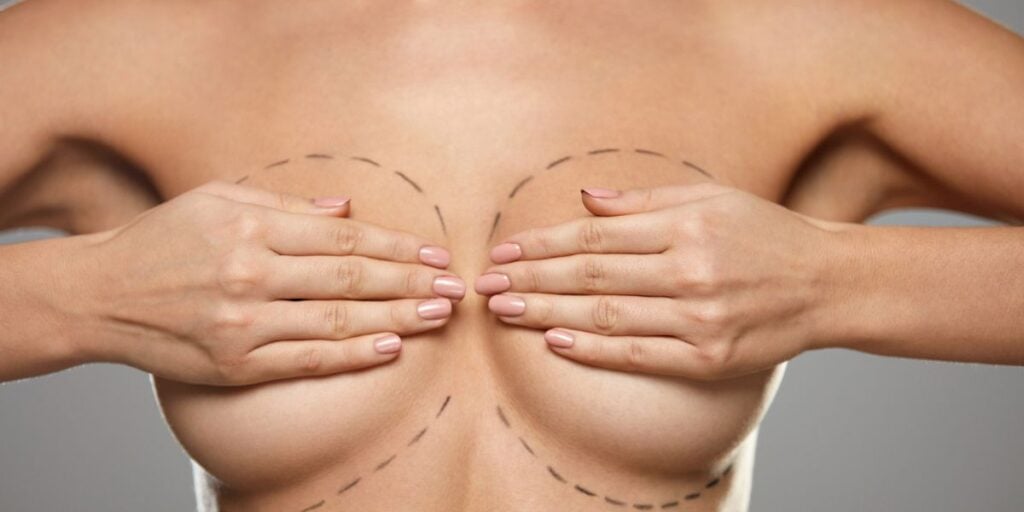
Most recovery guides give you a standard checklist: rest for two weeks, avoid lifting, and wear your surgical bra. What they rarely tell you is that recovery is as much a psychological process as a physical one. During this cosmetic procedure, your body heals from general anesthesia, incision trauma, and the insertion of breast implants while your brain adjusts to a new silhouette.
According to the American Society of Plastic Surgeons, most patients return to light activity within a week and resume most normal activities, including strenuous activities and routines, within four to six weeks. But this doesn’t capture the full picture. Patients often describe a strange mix of conflicting emotions in the early weeks (for example, excitement and disorientation), particularly as swelling distorts the results they were expecting to see.
At Saber Plastic Surgery, we prepare patients for both the physical and emotional aspects of recovery from the very first consultation. As one of our patients, Amanda Villegas, said after her breast augmentation: “Dr. Saber answered all my questions and concerns before and after my surgery. She made me feel so comfortable throughout the whole process.”
That comfort and reassurance don’t happen by accident. They come from setting realistic expectations before your surgery and having all the necessary information at your fingertips.
Your week-by-week breast augmentation recovery timeline
What can I expect in the first week after breast augmentation?
The first few days, specifically days one through three, are typically the most physically demanding. You’ll wake from general anesthesia feeling groggy and tight across the chest, and you’ll experience significant soreness. Postoperative swelling peaks in the first 48 to 72 hours, and your breasts will sit high on the chest wall, which is completely normal.
Most patients manage discomfort with prescribed or over-the-counter pain relievers. However, it’s worth knowing that individual tolerances vary significantly and that your pain relief will be assessed and tailored to your personal needs.
By days four through seven, the sharpest pain usually softens into a dull ache. You’ll wear a surgical bra or a dedicated support bra around the clock to support the implants and reduce movement at the incision sites while avoiding underwire bras for several weeks. Light walking is encouraged from day one to support circulation and prevent blood clots, but lifting anything heavier than a coffee cup is off the table.
When can I return to work after breast augmentation surgery?
Most patients with desk-based jobs return to work between seven and 14 days after surgery. If your role involves physical activity, lifting, or prolonged standing, plan for a minimum three- to four-week recovery period. We always recommend discussing your specific job demands during your personalized consultation, because a one-size-fits-all timeline doesn’t serve anyone well.
Weeks two through four bring visible improvement in swelling and a gradual softening of the implants. You’ll start to see a more natural shape emerge, one that begins to resemble the after photos you studied, though full settling takes considerably longer.
By week six, most patients feel close to normal in their daily activities and can often transition to high-impact sports bras, though strenuous exercise remains restricted.
When can I exercise after breast augmentation?
Light lower-body exercise, such as walking, gentle cycling, or low-impact cardio, is typically cleared around weeks three to four. Upper-body work and exercises that directly engage the pectoral muscle, including chest presses, push-ups, and heavy lifting, should be avoided until at least six weeks post-surgery, and only with your surgeon’s explicit clearance. Full results, including complete implant settling, take up to six months.
CALL (818) 770-7050 OR CLICK HERE TO SCHEDULE ONLINE
Does implant placement above or below the muscle affect recovery time?

Yes, significantly. Submuscular placement, where the implant sits beneath the pectoral muscle, often causes more intense discomfort in the first week because the chest muscles are stretched and displaced during surgery. Patients often describe a sensation of tightness or pressure across the chest that can feel alarming but is entirely expected.
Subglandular placement, where the implant sits above the pectoral muscle but beneath the breast tissue, typically involves less postoperative pain and a faster initial recovery. However, it may carry a higher long-term risk of visible rippling in patients with less natural breast tissue.
Placement choice depends on your anatomy, implant size, and personal goals, which is exactly why this decision is made during a one-on-one consultation rather than based on a general rule.
Dr. Saber performs both types of placements and will walk you through the trade-offs specific to your body. Understanding this distinction before surgery means you can make an informed choice about implant placement, and you won’t be caught off guard by the intensity of early discomfort if you’ve chosen submuscular placement.
The emotional side of recovery: body image, patience, and mental well-being
The emotional arc of breast augmentation recovery is real, and it doesn’t always follow the physical timeline. Peer-reviewed research published in the National Institutes of Health’s PubMed Central confirms that patient-reported psychological well-being and body image satisfaction improve significantly in the months after breast augmentation surgery.
However, the same research notes that the early postoperative period can involve heightened anxiety and emotional sensitivity. Knowing in advance that these emotional symptoms are common and often part of the process can make it easier to navigate.
The phrase “drop and fluff” is the informal name given to the natural recovery process of implants after breast augmentation surgery in the surgical community. It describes how the position and appearance of the implants change over time in the first few weeks after surgery, before settling into their final position.
In the first two weeks, it’s common to feel a version of “buyer’s remorse,” not because anything has gone wrong, but because your swollen, high-sitting new breasts don’t look like you imagined.
After the second week, as the swelling subsides and the muscles relax, the implants begin to lower (the “drop” phase).
Over weeks four through twelve, the implants gradually settle into a more natural position, and the surrounding tissue softens (beginning the “fluff” phase). The final result often looks quite different from what you see at week two as the implants settle into their final position.
This whole process can have an emotional impact that is often overlooked, and it is what most recovery guides skip. Yet this neglected part of the process is where our patients tell us they needed the most support.
Linda DeCarlo came to us for arm fat removal and breast reconstruction revision. Linda explains Dr. Saber’s approach: “Dr. Saber truly understands the female body and the emotional aspect of body insecurities, yet she is transparent about what can and cannot be done and takes time to discuss realistic expectations and outcomes.”
Linda’s experience underlines that a female perspective matters enormously during recovery, when emotions run high, and reassurance needs to be grounded in clinical honesty, not just comfort.
If you’re feeling anxious, tearful, or disconnected from your results in the first few weeks, you are not alone. Talk to your surgeon. At Saber Plastic Surgery, we are with you at every stage, and we encourage patients to reach out between appointments because early communication prevents small worries from becoming large ones.
What to set up at home before your surgery day

The patients who recover most smoothly are those who prepare their environment beforehand. Here’s what we recommend setting up in advance:
- A recliner or wedge pillow to keep your upper body elevated at 30 to 45 degrees while sleeping.
- Loose, front-opening clothing that doesn’t require lifting your arms overhead.
- Prepared meals or easy-to-heat food for the first five days.
- Medications, ice packs, and wound care supplies within arm’s reach.
- A designated recovery space on the ground floor, if possible, to avoid unnecessary stair climbing.
- Childcare or pet care for at least the first 72 hours.
How do I sleep after breast augmentation surgery?
Sleep on your back with your upper body elevated for the first three to four weeks. This position reduces swelling, keeps pressure off the incision sites, and prevents the implants from shifting during the early healing phase. Side sleeping is generally cleared around weeks four to six, and stomach sleeping should wait until your surgeon confirms the implants have fully settled, typically around the three-month mark.
Dos and don’ts during breast augmentation recovery
Do:
- Wear your surgical bra as directed.
- Attend every follow-up appointment.
- Keep incision sites clean and dry.
- Stay hydrated.
- Walk gently from day one.
Don’t:
- Smoke or use nicotine products (which impair healing).
- Submerge incisions in water.
- Skip pain medication doses in the early days.
- Return to exercise before your surgeon clears you.
Incision care is particularly important. Our surgeons provide specific care instructions for your wound type, but the general principle is to keep the area clean, avoid sun exposure on healing scars for at least 12 months, and promptly report any changes in appearance. For a broader look at protecting yourself during any surgical recovery, our guide on reducing your risk of complications after cosmetic surgery covers principles that apply across procedures.
Warning signs to watch for and when to call your surgeon
Most breast augmentation recoveries are uneventful, but knowing the red flags to look out for will help you act quickly if something does arise. Contact your surgeon immediately if you experience any of the following:
- Signs of infection, such as sudden, severe swelling on one side only.
- A fever above 38.5°C (101.3°F).
- Increasing rather than decreasing pain after day three.
- Redness, warmth, or discharge at the incision site.
- Difficulty breathing.
The FDA’s guidance on breast implant risks and complications outlines the full range of postoperative concerns to monitor, including capsular contracture and implant rupture, which can develop months or years after surgery. Regular follow-up appointments are not optional. They are how we catch and address issues before they become serious.
At Saber Plastic Surgery, safety always comes first. Dr. Saber holds full admitting privileges at top surgical centers and hospitals, which means that if a complication requires escalated care, you are already in the right hands.
Recovery after breast augmentation with a breast lift: what’s different
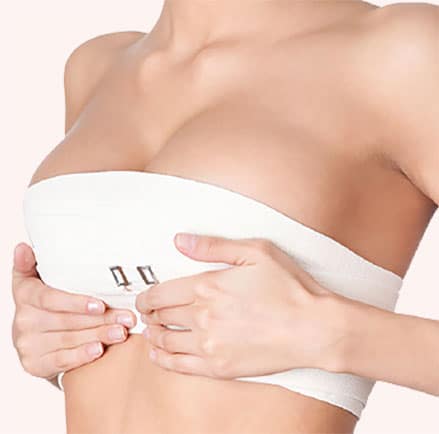
Patients who combine breast augmentation with a breast lift (mastopexy) should expect a longer, more involved recovery than with implants alone. The mastopexy component requires longer incisions, additional tissue reshaping, and more postoperative swelling. Most augmentation-mastopexy patients need two to three weeks before returning to desk work, and the emotional adjustment period can be more pronounced because the change in appearance is more dramatic.
Consider the experience of Monica Prusa, who came to us for a tummy tuck and described the transformation this way: “Dr. Saber gave me the gift of having the body I kept fighting for.”
Patients who combine procedures often report the most profound emotional shifts, from initial disorientation to eventual satisfaction. Preparation and honest preoperative conversations make all the difference.
If you’re considering combining procedures, have that conversation at your personalized consultation with Dr. Saber. Our surgeons will always give you an honest, direct assessment of what’s realistic for your body and recovery timeline.
CALL (818) 770-7050 OR CLICK HERE TO SCHEDULE ONLINE
Why choose Dr. Saber for breast augmentation in Los Angeles?
Dr. Sepideh Saber, MD, FACS, brings years of experience and a sensitive, female perspective for patients of all ages, genders, and orientations. Testimonials from patients of all ages and from all walks of life have praised not only their outcomes but Dr. Saber’s caring, thoughtful approach to all types of appearance and health-related matters, and that with Dr. Saber, they always feel heard.
Dr. Saber graduated from Stanford University’s world-renowned medical school and did her plastic and reconstructive surgery residency at the University of Southern California (USC). She completed her fellowship at New York University (NYU) in the extremely challenging and delicate areas of hand surgery and microsurgery.
To request a consultation, call (877) 205-4100 or schedule a consultation online.
Dr. Saber’s practice is located in Encino, CA, for patients throughout the Los Angeles area. We are also convenient to Encino, Woodland Hills, Sherman Oaks, Calabasas, Burbank, Glendale, Hidden Hills, Agoura Hills, Northridge, North Hollywood, Malibu, Topanga, Canoga Park, Reseda, Valley Glen, Chatsworth, West Hills, Winnetka, Universal City, Bel Air, Beverly Hills, Downtown Los Angeles, Silverlake, and Echo Park.
Frequently asked questions about breast augmentation recovery
How long does breast augmentation recovery take?
The recovery period timeline varies based on implant placement, individual healing capacity, and whether additional procedures were performed at the same time.
Most patients feel functionally recovered within four to six weeks, meaning they’ve returned to work, light exercise, and daily routines. However, full recovery, including complete implant settling, softening of scar tissue, and final aesthetic results, takes up to six months.
What is rapid recovery breast augmentation, and how does it work?
Rapid recovery breast augmentation refers to a set of surgical and anesthetic techniques designed to minimize postoperative pain and accelerate early mobilization. These protocols typically involve long-acting local anesthetics applied during surgery, anti-inflammatory medications, and a focus on minimizing muscle trauma during implant placement.
Not every patient is a candidate, and the approach must be tailored to your anatomy and implant choice. But if early return to activity is a priority for you, ask about this specifically during your consultation.
What are the warning signs of complications after breast augmentation?
The most serious warning signs include sudden asymmetric swelling, fever, worsening pain after the third postoperative day, redness or warmth at the incision site, and difficulty breathing. Longer-term concerns include hardening of the breast tissue (capsular contracture), changes in implant shape, and unusual lumps.
Any of these symptoms warrants a prompt call to your surgeon rather than a wait-and-see approach. Early intervention consistently produces better outcomes than delayed treatment.

Dr. Saber offers a more sensitive, female perspective for patients of all ages, genders, and orientations. Former patients from all walks of life have praised not only their treatment outcomes but her caring, thoughtful approach to a wide array of appearance and health-related matters.
Categories


What patients say about Dr. Saber …
I was fortunate to find Dr. Saber after researching board-certified surgeons who specialize in breast cancer reconstruction revision surgery. I knew I was in good hands from the moment I spoke with the lovely and efficient Marlene, Dr Saber's office manager. Dr Saber patiently listened to my concerns and, after examining me, explained what I could realistically expect the outcome to be from another surgery. She also explained to me that she would need to review my previous surgery notes before we could discuss a possible further surgery, which I found comforting and highly ethical. I also discussed a couple of other procedures that I would like done, including fat removal from my large upper arms that had caused me great embarrassment for several years. Dr. Saber is an excellent surgeon who is incredibly kind and genuine. She truly understands the female body and the emotional aspect of body insecurities yet, she is transparent about what can and cannot be done and takes time to discuss realistic expectations and outcomes. My breast reconstruction revision surgery will take place in the New Year, but in the meantime, I have the most fabulous upper arms that I recently flaunted in a strapless dress (something I have not done in years). Dr Saber is truly one of a kind, and I still cannot believe how fortunate I am to have found her. I highly recommend Dr Saber.

I don’t have enough wonderful words to describe Dr Saber and Marlene! I had a tummy tuck done this year and from start to finish the entire experience was amazing. Marlene is always so helpful and works so hard to make every detail a breeze for you. When I had my consultation with Dr Saber I was at a point of complete agony with my body. She instantly took that stress and frustration off my shoulders! As a woman not being heard by doctors for years I left that consultation with happy tears knowing I had finally found my Dr. It was a major surgery and I felt completely zen and at peace going in because she really does make you feel that safe. I didn’t think I would ever look the way I do now! She gave me the gift of having the body I kept fighting for. I will never stop recommending her.

I saw Dr. Saber when I broke my wrist. I ended up having to have surgery. She did an excellent job and I am healing nicely. She was very professional, but was also very kind and compassionate. I would highly recommend her!!

I LOVED DR SABER!!! There are a few reasons why I chose her. One was because she’s a female Doctor that was my goal who also did a good job (which I was able to confirm with all her before and after photos) and what sold me was my safety in mind. She made me feel like I was in the best hands ever along with Marlene who coordinated everything THANK YOU LADIES! Dr Saber helped me get back the body I have always desired. I had a lot of stomach fat from weight gain and I lost weight so a lot of my weight was in my front lower and upper abdomen. Now I have a super beautiful curvy body like an hourglass after a tummy tuck and lipo she did. She understood the assignment hahaha . I’m 32 years old no kids just wanted to enjoy my younger body looking and feeling beautiful and she really took good care of me. Even after hours I had an emergency due to my fault but she was there and got back to me very quickly and I’m very grateful. I also think her work says a lot because I stopped taking pain medication on the 3rd day after surgery and was fine with very minimal pain I was able to tolerate the healing process. Highly recommend going with her I just had a wonderful experience and would do it all over again if I had too. Maybe after I have kids. Thanks Dr Saber and team <3

Dr.Saber is by far one of the best plastic surgeons. I love how she takes her time to explain any procedure to the patients understanding. She always makes sure to answers any and all questions.From fillers to body contours she’s the one you want.

Dr Saber is amazing! She is caring and very informative. I went in for fillers and she explained procedure step by step. I highly recommend her and look forward to future visits.

Dr. Saber was friendly, knowledgeable and professional. She took time to listen, answer all my questions and was forthright in her recommendations. Her staff was friendly and helpful. I was very happy with the results and plan on going back. If you are looking for a first rate professional experience look no further she is the doctor for you!

Dr. Saber is one of a kind plastic surgeon with a heart of gold. She is a well verse plastic surgeon that puts her patient's needs before anything else. She genuinely cares about every single patient, and her work speaks for itself. I notice every post-operative result on her Instagram (@saberplasticsurgery) the patients have this glow that radiates through. I have been going to Dr. Saber for my Botox for the past 3 years, and love the results every time. I know who I will be going to for any future plastic surgery needs, and will confidently refer family and friends to Dr. Saber for any Botox, fillers, and plastic surgery consultations.

I have nothing but great things to say about Dr. Saber! I am so pleased with my results from a breast augmentation she performed on me back in late June! She answered all my questions and concerns before and after my surgery. She’s very easy to get in contact with and she’s so nice. She made feel so comfortable throughout the whole process. 100/10 Lover her work!!

Dr Saber is hands down the best surgeon! She took her time answering my questions and explained procedure in detail. After doing liposuction six months ago, I am extremely happy with my results and I appreciate her so much.

Dr. Saber is so kind and thorough with her patients! She is an amazing doctor and genuinely cars about everyone she comes in contact with. I would recommend her to anyone for any hand surgery or cosmetic procedure.